
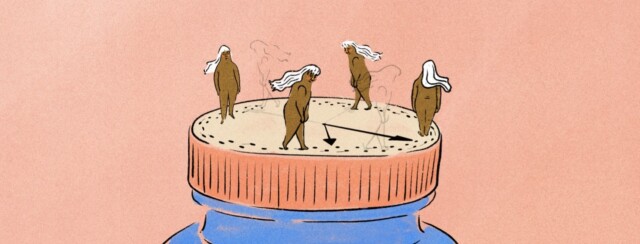

The Symptoms of Depression People Don’t See

It’s no secret that I have depression — as a mental health advocate I tell almost everyone I meet, but lately I’ve been high functioning, more so than usual, and I’m not sure a stranger would recognize any depression symptoms.
Recently, an acquaintance of mine, who saw me at a couple social events and as well as some pictures on Facebook, told me it was great that my depression was gone.
Gone?
I tilted my head at her. She didn’t know that I hadn’t brushed my teeth in nine days or that it was a feat for me to shower once a week. Mentally I scanned the photos I had uploaded to Facebook and catalogued the events I had gone to. All smiles, (seemingly) washed hair, gowns, friends and happy faces.
I wasn’t trying to fake being happy; at those moments, I was. I guess that’s why some refer to being highly functional as “smiling depression.” According to the National Alliance on Mental Illness (NAMI.org), smiling depression is a form of depression where individuals appear happy on the outside while experiencing severe internal symptoms such as despair, anxiety, or worthlessness.
It got me thinking about the “invisible” depression symptoms that people don’t see, mostly because people like me hide it. Throughout my two-decade mental health journey, these are the symptoms that I don’t always show to everyone:

The Exhaustion of "Performing" and Isolation
Being depressed is exhausting! I remember before I was ready to talk about my depression, I put on a happy face during the workday. Laughed when other people laughed, created polite chit-chat with my co-workers. Anything to distract from the fact that I was harboring so much pain. I worked hard to pretend everything was A-OK, then I would come home and collapse. I needed to recharge. I needed to not smile. It was emotional exhaustion every day, and the more I isolated, the more I craved it. I told myself that I was recharging, and that alone time was good for me, but there’s a very thin line between healthy alone time and removing yourself from your own life.
The Private Struggle with Hygiene
One symptom that I still struggle with, even after 20 years, is poor hygiene. I touched on this earlier, but for me, when I’m in a depressive episode, it is near impossible for me to brush my teeth on a daily or even weekly basis. It’s gross, I know. But it just feels like an enormous task that I have no strength to do. I know brushing won’t take long and that I’ll feel better, still, I just can’t do it. It’s the same with the shower. I feel amazing after a shower, but when I’m depressed, it’s also an impossible task. I try my best and stockpile dry shampoo.
Cognitive Decline and "Brain Fog"
I never believed brain fog was “a thing” but research shows that depression is strongly linked to cognitive decline,1 affecting memory and executive function. According to the National Institute of Health, depression accelerates cognitive decline in older adults, increases dementia risk and can cause functional impairment at any age.
When I’m in an episode, I have trouble remembering people’s names, faces and sometimes words. I can’t remember dates and juggle events like I used to. This is frustrating to me and very embarrassing at times. Brain fog can happen because of actual structural changes in the brain or because of medications, and it can be hard to explain to others.
The Scariest Invisible Symptom: Suicidal Ideation
This, by far, is obviously the scariest invisible symptom of depression. It’s important to watch for isolation, high-functioning behavior, physical pain/fatigue, talk about being a burden or feeling trapped. When I’ve been suicidal, I’ve been extremely sad and experienced anhedonia. When I isolate, I stop answering calls, stop cleaning and stop caring about most everything. I know that’s not much to go on.
If you think a loved one is in crisis and needs help, call or text the Crisis & Suicide Hotline 988, 911 or go to the nearest emergency room.
Let’s Look Past the Smile
Depression is more than being sad. It’s complex and difficult to understand, made even more complicated by the fact that people fake being happy because of stigma. We must do better than be satisfied by smiling photos on social media.
People don’t always see these depression symptoms but that doesn’t mean they can’t. Know better, do better, right? Let’s do better. Let’s stick around for the answer when someone asks, “How are you?”
Let’s shine the light on stigma and these invisible symptoms. There’s so many people who need to be seen.