

Tips for Coping with Depression and Insomnia

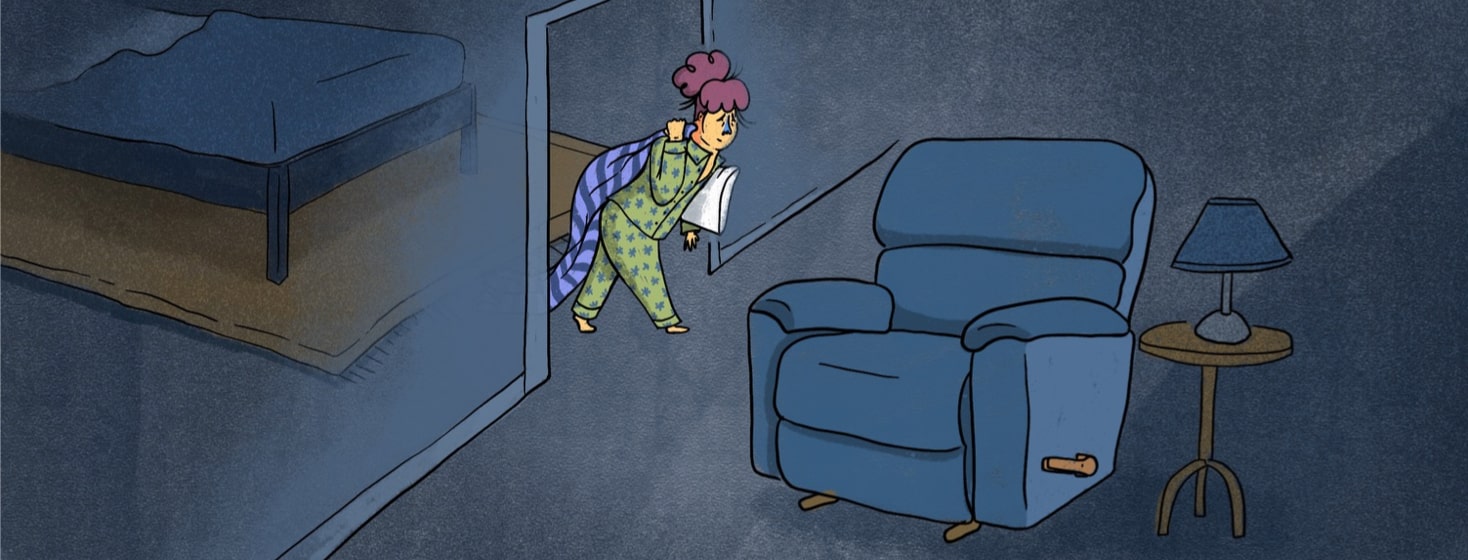
Yet again, I find myself in my recliner instead of in my bed. My dogs have faithfully followed me to the living room and are curled up under my giant blanket. They have no idea how lucky they are to be sleeping.
How are depression and insomnia linked?
I have been living with depression and insomnia so long that I cannot remember which one started first. According to the Sleep Foundation, about 40% of people with insomnia have clinical depression and about 80% of those with depression experience insomnia1.
What is the connection behind this depression insomnia cycle? Insomnia can affect "the function of the neurotransmitter serotonin" in the brain and "affect the body's stress system." Both issues can increase the possible occurrence of depression.2
Sleep tips at a glance
If you are also struggling to find rest, here is a quick summary of the key coping strategies that I cover later in this article:

- Limit bed and bedroom usage strictly to sleep and intimacy.
- Maintain a consistent sleep schedule, even on weekends.
- Get out of bed if you cannot fall asleep within a reasonable time.
- Optimize your sleep environment by keeping it cool, dark, and quiet.
- Minimize nighttime digital distractions by silencing your phone.
How does sleep hygiene improve quality sleep?
Sleep hygiene is creating a combination of bedroom environment and daily routines that improve the sleep quality and quantity of rest you recieve.2
How should you properly use your bedroom?
One of the first tips I was ever given to improve my sleep was to limit my usage of the bedroom and bed. I learned that the bedroom should be used for sleep and intimate activities only. This means that other activities such as watching television and reading a book should be done in a different room. The reason behind this is to have your brain associate the bedroom with sleep.
Why is consistency important for a better night's rest?
Another important habit is creating a consistent sleep routine. This involves going to bed and getting up at the same time, during the week and weekends. A lot of people make the mistake of changing their routine drastically on the weekend by staying up all night and sleeping all day, which disrupts their change for quality sleep.
What should you do instead of tossing and turning?
Something else that I learned is not to stay awake in bed for hours. If you cannot fall asleep, go to another room and try again later. This is a crucial boundary when coping with depression and insomnia.
What else can help you cope with insomnia?
Something we do every night before bed is that we turn the air conditioner down to 68. I love to curl up under a blanket when it is nice and cool. I also sleep with the ceiling fan on and another fan by the foot of my bed.
I also sleep with my phone face down and on silent. The phone on silent part may not work for everyone, but it is a very helpful step for me. With some of my family members that like to text at random hours of the night, I need it so they do not wake me up.
I also find it helpful to use black-out curtains. This keeps the room as dark as possible, which helps me sleep. I also do not have anything with lights on in my bedroom. If I need to check the time, I can quickly look at my phone and then place it back face down.
What if you just can't fall asleep?
When I cannot fall asleep, I get up and go to my recliner in the living room. During this time, I tend to cuddle with my dogs and read a book. When I start to feel tired, I go back to my bed to try again. There are times when petting my dogs is enough to relax me to fall asleep, and other times when quality sleep simply does not find me. Managing this frustration is just another part of coping with depression and insomnia.